Inclusive Benefits: Weight Management and Chronic Disease Support

Weight Management as a Benefits Priority: What Canadian Employers Need to Know

Obesity in Canada: A Rising Concern for Employers

Excess weight and obesity now affect roughly one in three Canadians, a trend that continues to rise and presents growing challenges for both employees and employers seeking to foster a healthy workforce.

Over the past couple of years, weight loss medications have come into the spotlight and at the Immix Group we have heard from employers and plan members seeking information on drugs from Ozempic to Saxenda and more. 

Not only is this a new FAQ for our team, it’s a topic of discussion with our supplier partners, as they navigate the inclusion or exclusion of these sought after medications.

This raises an important question for organizations:

As an employer, what is the right and sustainable way to handle obesity and weight management in our benefits plan?” 

In recent years, insurance providers have begun to address weight management more directly, offering employers multi-pronged approaches that go beyond traditional “healthy living” campaigns. These initiatives now include targeted programs, therapies, and prescription medications for weight management, bringing the topic more openly into discussions about employee health.

Why Employers Should Think about Weight Management Within Benefits Programs

Supporting weight management in the workplace is more than a wellness initiative—it’s a strategic investment in employee health, productivity, and organizational culture. Nearly one in three Canadians is affected by excess weight or obesity, which the Canadian Medical Association (CMA) recognizes as a chronic, relapsing disease with complex causes, including genetics, environment, metabolism, and behaviour and not merely a lifestyle choice. This distinction matters because it underscores that obesity requires ongoing management, much like diabetes or hypertension, and has measurable implications for employers.


The impact of obesity on the workplace is significant

Productivity and absenteeism: Obesity and related comorbidities are strongly linked to increased absenteeism and reduced productivity (presenteeism). Employees managing obesity-related conditions may need more time off or may be less able to perform at full capacity.

Mental health: Employees living with obesity are more likely to experience stress, depression, and anxiety. Workplace stigma can exacerbate these mental health challenges, further affecting engagement and performance.

Comorbidities and health costs: Obesity is associated with numerous chronic conditions, including:

    • Type 2 diabetes
    • Hypertension
    • High cholesterol
    • Fatty liver disease
    • Heart disease
    • Sleep apnea
    • Certain cancers
    • Depression and anxiety

Because chronic diseases drive significant costs in benefit plans, addressing obesity proactively can help control long-term healthcare spending, including both medical claims and drug coverage inflation.

Why it makes sense for employers to invest:

  • It’s a chronic disease, not a personal failing: Recognizing obesity as a medical condition shifts the focus from blame to support, promoting an inclusive and compassionate workplace.
  • Measurable ROI: Programs that help employees manage weight can reduce absenteeism, enhance productivity, and lower health-related costs over time.
  • Culture and engagement: Supporting employee well-being—including weight management—demonstrates that the organization values health, inclusivity, and mental wellness. This can boost morale, retention, and overall workplace engagement.

Investing in weight management is therefore both a human and business imperative. By addressing obesity in a structured and supportive way, employers can help employees improve their health, mitigate chronic disease risks, and ultimately create a more productive and resilient workforce. Beyond the business case, it is an investment in employee wellbeing and reflects an organization’s commitment to being inclusive and caring.


Solutions for Employers: Supporting Weight Management Through Benefits

Effectively addressing weight management in the workplace requires a multi-faceted approach. Weight gain is influenced by numerous factors beyond diet and physical activity, including stress, genetics, medications, environmental conditions, and socio-economic circumstances. Employers who recognize these diverse influences and provide comprehensive benefits are better positioned to support employee health, productivity, and engagement.

Prescription Weight-Loss Medications

Prescription medications for chronic weight management have become an increasingly visible part of benefits discussions. While many group insurance contracts explicitly exclude anti-obesity drugs, employers can request coverage for these medications with some providers (usually at an additional cost).

The number of prescriptions for weight-loss drugs in Canada has grown dramatically: from 250,000 in 2019 to 2.7 million in 2023, an 82% annual increase, largely due to the wider availability of new medications. Costs are rising correspondingly, with weight-loss drugs representing a growing share of employer drug plans.

Key medications available in Canada include:

Weight loss medications work similarly to reduce appetite, increase feelings of fullness, and slow stomach emptying. Some work in the brain or digestive pathways.

  • Saxenda (liraglutide) – GLP-1 receptor agonist, daily injection. Approved for chronic weight management since 2015. Similar to the diabetes drug Victoza but at a higher dose. Often available under employer drug plans.
  • Mounjaro / Zepbound (tirzepatide) – Dual GIP/GLP-1 receptor agonist, weekly injection. These are the same molecule, but different brands. Zepbound is approved for chronic weight management and type 2 diabetes (as of July 2025) whereas Mounjaro is only approved by Health Canada for type-2 diabetes. Stated to produces more weight loss than Saxenda or Ozempic. 
  • Contrave (naltrexone + bupropion) – Oral medication, taken twice daily. Targets brain pathways affecting appetite and cravings. Approved for chronic weight management.
  • Xenical (orlistat) – Lipase inhibitor, oral, taken three times daily with meals. Reduces fat absorption; gastrointestinal side effects possible. Approved for chronic weight management.
  • Wegovy (semaglutide) – GLP-1 receptor agonist, weekly injection. Same active ingredient as Ozempic but approved specifically for chronic weight management.
  • Ozempic (semaglutide) – GLP-1 receptor agonist, weekly injection. Approved for type 2 diabetes; often used off-label for weight loss but not approved for this use in Canada.


Ozempic is likely the most well-known of these drugs but it must be stressed that like others, it is not approved as a weight loss medication in Canada; it is a Special Authority Drug used in the treatment of Type 2 diabetes. Only those who are approved via the Special Authority process in BC are eligible for coverage for Ozempic.

Which weight loss drugs are covered by which insurance providers in Canada?

Like many aspects of an employee benefits program, the exact coverage under an employer plan depends on the plan design selected by the employer and the policy of insurer. Some providers have chosen to exclude specific drugs. Reasons vary, but generally, insurers will often exclude a drug if there is an alternative drug they feel has the same efficacy.

Obesity Canada states that fewer than 20% of private insurance plans cover obesity medications.

Coverage for these medications varies by plan and insurer, and access can be complex. Employers should work closely with their benefits advisory team to ensure there is clear understanding of options.

For example, RBC Insurance for October 2025 removed weight loss drugs as part of standard drug coverage, however they can still be included as an optional add-on. To include coverage they advised a 2.25% increase to EHC rates for $2K annual maximum reimbursement.

Pacific Blue Cross currently takes a similar approach, in that it is an add-on to a standard drug formulary.

These two insurers differ with the specific drugs they will cover, however, please note that we expect many changes in this area of benefits in upcoming years.


Non-Drug Supports: Supporting the Whole Person

Weight management is more than medication. Effective benefits programs integrate resources that address the physical, psychological, and lifestyle factors influencing weight. These may include:

  • Paramedical services: Coverage for dietitians, psychologists/CBT, physiotherapists, and kinesiologists to support nutrition, emotional health, and physical activity.
  • Employee and Family Assistance Programs (EFAP): Counseling, stress management, and resources for emotional eating or obesity-related challenges.
  • Health spending accounts (HSA) or wellness accounts: Can be used for personal trainers, gym memberships, fitness equipment, or wellness programs.
  • Equipment and medical supplies: Coverage for CPAP machines for sleep apnea, diabetes monitoring equipment, or other obesity-related medical devices.
  • Healthy Living Rewards Programs: many programs exist or can be managed in-house to encourage and reward employees to make healthy choices. Step challenges, sleep or nutrition-based activities all can play a role.


By offering a comprehensive, multi-pronged benefits approach, employers can help employees manage weight safely and sustainably, reduce absenteeism and presenteeism, improve mental health, and support an inclusive, caring workplace culture. These strategies not only improve employee well-being but can also deliver measurable ROI by reducing chronic disease-related costs and supporting long-term productivity.


Solutions:

Effectively addressing weight in the workplace requires looking beyond diet and exercise alone. Numerous factors contribute to weight gain, including stress, genetics, medications, environmental influences, and socio-economic conditions. Recognizing these diverse influences is key to designing benefits that genuinely support employees’ health and well-being.

Plan design, risk and fairness: what employers should think about before deciding on weight loss drug coverage

At the Immix Group, our perspective is that employers should cover weight loss medications as part of a comprehensive benefits program. While there is a cost to including these drugs, it can be argued that supporting weight loss through medications can have a positive impact on overall health, especially considering the comorbidities that accompany obesity.

Balancing fairness, access, and plan sustainability

The cost of a benefits program can be a significant investment for businesses. By working with your advisor to thoughtfully design coverage, employers can:

  • Support employee health with access to clinically approved therapies
  • Reduce long-term health costs associated with obesity-related comorbidities
  • Promote equity and inclusivity in their benefits offering


Insurer safeguards and clinical criteria

Making the decision as an employer to include obesity management medications does not mean that all employees will suddenly have full access to these drugs and therapies. Insurers commonly use prior authorization and clinical criteria to manage plan risk. These may include:

  • Minimum BMI thresholds or documentation of weight-related comorbidities
  • Verification of medical necessity by a healthcare provider
  • Defined treatment plans or monitoring requirements


These safeguards help control costs while ensuring medications are used appropriately for those with a clinically recognized need.

As mentioned previously, currently fewer than 20% of plans include weight loss medications, despite the fact that obesity is recognized as a chronic, relapsing disease with significant health consequences. Our opinion at the Immix Group is that employers must tread carefully when choosing to exclude specific items, therapies or drugs. Structured, evidence-based coverage can strike a balance between access, fairness, and sustainability.


Communicating Weight-Management Benefits Thoughtfully: Tips for Employers

It’s important to remember that stigma surrounding obesity remains a serious concern. Many individuals who struggle with weight face misunderstandings or judgment that can negatively affect both their mental and physical health. A thoughtful benefits strategy must therefore balance effective interventions with support and sensitivity, creating an environment where employees can pursue healthier lifestyles without fear of bias or shame.

As employers consider how to support obesity management within their benefits program, communication must be clear, neutral, and sensitive. Because obesity is a chronic, relapsing condition, framing it as part of your broader health and chronic-disease strategy—rather than a lifestyle issue—is key to reducing stigma.

Consider the following, as you decide your approach as an employer:

  • Use simple, respectful language such as “obesity management” or “clinically appropriate treatment,” and avoid framing weight as a matter of willpower or personal choice. Reinforce that your intention is to support employee health, not appearance.
  • Be transparent about what is and isn’t covered, and why. Coverage depends on insurer policy, clinical criteria, and plan sustainability; explaining this context helps set expectations and ensures employees understand that decisions are made fairly and consistently.
  • Privacy is essential. Clarify that accessing treatment is voluntary, confidential, and determined between the employee, their healthcare provider, and the insurer—not the employer.
  • Finally, emphasize a whole-person approach. Weight is influenced by many factors, and support often extends beyond medication. Highlight available resources such as dietitians, psychologists, EFAP services, wellness or health spending accounts, and coverage for conditions linked to obesity. Positioning these supports together reinforces that your benefits program aims to meet employees where they are and provide meaningful, respectful care across the full spectrum of health needs.


Work with your advisor to develop an effective, thoughtful strategy

Addressing weight management within a benefits plan requires balancing employee health needs with plan sustainability, fairness, and evolving insurer policies. With obesity recognized as a chronic disease—and new therapies reshaping expectations—employers should consider a comprehensive approach that includes medication coverage, non-drug supports, and sensitive communication that reduces stigma and protects privacy. Because coverage options, clinical criteria, and cost impacts differ widely across insurers, employers should work closely with a knowledgeable benefits advisor. At the Immix Group, we help you navigate plan design, assess risks, and build an approach that supports employees while keeping your program sustainable.

Key takeaways:

  • Obesity is a chronic disease affecting one in three Canadians and has significant workplace impacts, including absenteeism, mental health, and comorbidities.
  • Supporting weight management through benefits is both a health and business strategy, improving productivity, engagement, and long-term costs.
  • Coverage options vary widely by insurer and plan; prescription medications may be included as an optional add-on with clinical criteria.
  • Non-drug supports—such as dietitians, mental-health resources, EFAP, and wellness accounts—are critical for a whole-person approach.
  • Employers should work closely with a benefits advisor to design fair, sustainable, and inclusive weight-management programs.

FAQ’s:

Why should employers address weight management in their benefits plan?
Obesity is a chronic disease linked to productivity loss, absenteeism, mental health challenges, and comorbidities. Supporting employees’ weight management is both a health and business investment.

Which weight-management medications are available and covered in Canada?
Health Canada has approved drugs including Saxenda, Zepbound, Wegovy, Contrave, and Xenical for chronic weight management. Drugs such as Ozempic are approved by Health Canada only for type 2 diabetes; use for weight loss is off-label. Coverage varies by insurer and plan, often requiring prior authorization and clinical criteria.

Are weight-loss drugs included in most private insurance plans?
No. Fewer than 20% of Canadian private plans cover obesity medications, and coverage may require additional costs or optional plan add-ons.

What non-drug supports can employers provide for weight management?
Supports include dietitians, psychologists/CBT, physiotherapists, kinesiologists, EFAP services, health or wellness spending accounts, and coverage for obesity-related medical equipment.

How should employers communicate weight-management benefits to employees?
Use neutral, non-stigmatizing language, emphasize health rather than appearance, explain what is covered and why, maintain privacy, and highlight a whole-person approach.


Read More:

 Managing your obesity | Obesity Canada

Obesity in adults: a clinical practice guideline | CMAJ

Managing Obesity: A Shared Commitment

Managing obesity: a shared commitment

Weight Management Program Teladoc Medical Experts

GLP-1 Drug Coverage Continues to Rise in Canada

Lindsay Byrka

Lindsay Byrka, CFP® BA, BEd

Vice President, Immix Group: An Employee Benefits Company
A Suite 450 – 888 Dunsmuir St. Vancouver V6C 3K4
O  604-688-5262 

E lindsay@immixgroup.ca
W www.immixgroup.ca

Facebook
Twitter
LinkedIn

Latest Insights

Your Benefits, Your Way: The “101” on Health & Wellness Spending Accounts

If you’re a Canadian business owner looking to offer flexible, tax-effective coverage that empowers your team, an HSA could be the missing piece of your benefits offering.

In this guide, we’ll break down what an HSA is, how it works, and why businesses like yours are making it a staple in their employee benefits package.

Health and Wellness Spending Accounts are Increasing in Popularity

Most people have heard of Health Spending Accounts, which have become increasingly popular over the past decade or so, with around 40% of plans offering some form of HSA.

This is in response to multiple generations in the Canadian workforce and their diverse needs, the increasing desire for flexibility and choice, and the simplicity of offering this predictable-cost benefit.

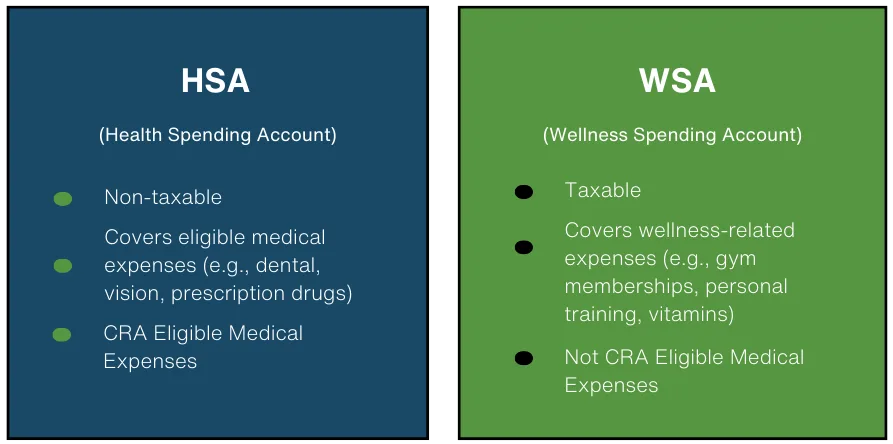
Most Canadian carriers now facilitate not only Health Spending Accounts (non-taxable, for items on the CRA’s Eligible Medical Expense listing) but also Wellness or Lifestyle Spending Accounts (taxable items that fall outside the CRA listing). In addition, many specialty providers offer robust, low-cost, user-friendly platforms for Health and Wellness Spending Accounts with many customizations available.

What is a Health Spending Account? 

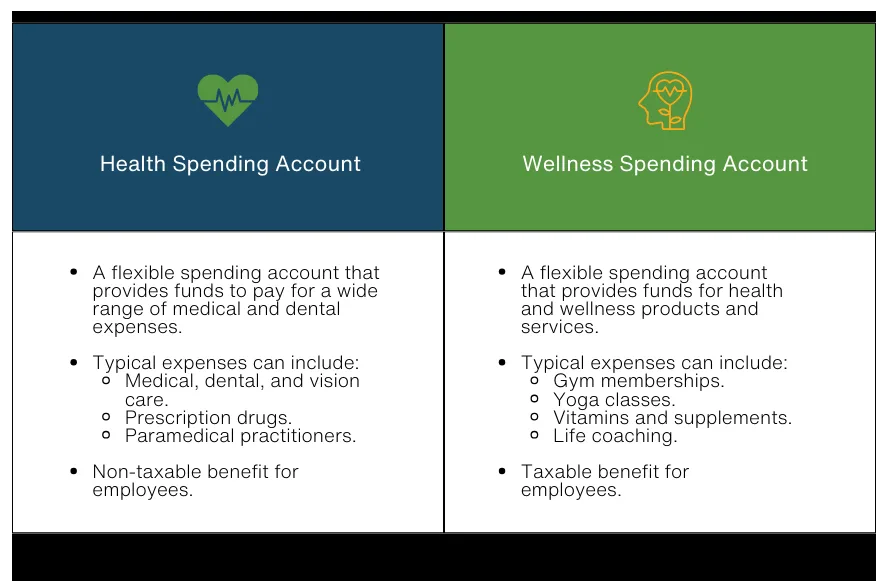
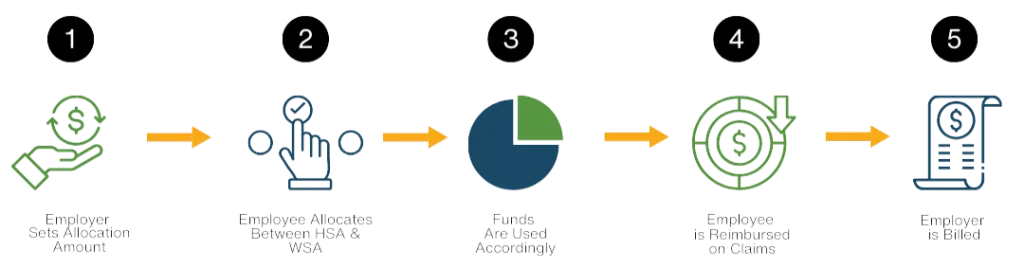
A Health Spending Account is set up by an Employer and provides a pre-determined annual allocation to an Employee, to be used for CRA-eligible medical expenses. Employees have the flexibility to choose which expenses are submitted through the Health Spending Account. Employees receive reimbursement for eligible claims on a tax-free basis. As the Employee uses their account, their available balance reduces.

Employers pay for the amount of the expense, plus an administrative charge for adjudication, and any applicable taxes on the admin fee. The total expense is tax-deductible to the Employer. To be CRA-compliant, Health Spending Accounts need to be facilitated via a third-party provider.

What is a Wellness Spending Account (WSA)?

Also known as a Lifestyle Spending Account (LSA), the primary difference from a Health Spending Account is WSAs/ LSAs are for taxable expenses (i.e. those not found under the CRA listing). The funding and cost for the Employers are the same as with a HSA, and Employers can also deduct the expense. The main difference is that expenses reimbursed through a Wellness/ Lifestyle Spending Account are a taxable benefit to Employees.

What is a Flexible Spending Account?

This simply refers to an account where the employee has both HSA and WSA reimbursement available. Typically, they can choose what percentage of the total allocation falls into each of the buckets (taxable or non-taxable) as described.

health spending account vs. wellness spending account Canada chart by Immix Group

Collectively, many people refer to these accounts as “Health Spending Accounts” or “Health Care Spending Accounts” or by the American term “Health Savings Accounts,” although they may offer the ability to remit expenses under each tax bucket.

The Benefits: Why More Employers are Implementing Health Spending Accounts

From our perspective as benefits advisors, the answer to this is twofold: employees love Health Spending Accounts for the flexibility and choice, and employers find them cost-effective, simple and practical. The benefits are vast:

  • Provides employees with choice and flexibility as to how benefit dollars are spent.
  • Supplements insured benefits program reimbursement for example topping up an insured benefit item where a dollar limit has been reached.
  • Cost control for employers; there is an upper limit per year and a defined admin fee, so no surprises!
  • Ability to highly customize including with classes of coverage with varying levels of allocation.
  • High value to invest in wellness programs, with research indicating 300-400% ROI.
  • Tax advantaged as a fully deductible expense for employers.

What sorts of items can be covered through a Health Spending Account?

HSAs can cover a wide range of expenses as determined by the CRA Eligible Medical Expense Listing similar to traditional health benefits, including:

  • Dental treatments and orthodontics
  • Prescription drugs and medical devices
  • Paramedical services like massage therapy, physiotherapy, and acupuncture
  • Vision care, including glasses and laser eye surgery
  • Medical equipment, supplies or surgeries
  • Mental health practitioners
  • Insurance premiums, deductibles and coinsurance from insured plans

Wellness Spending Accounts can cover nearly anything the employer desires! Common expenses include:

  • Gym memberships, fitness classes
  • Activity passes such as ski passes
  • Children’s sports
  • Childcare expenses
  • Vitamins and supplements
  • Fitness equipment
  • Contributions to RRSPs
  • Medical practitioners excluded by the CRA such as alternative health practitioners

Health Spending Accounts vs. Traditional Insured Benefits

At the Immix Group, we firmly believe that Health & Wellness Spending Accounts should be considered as a supplement to a more robust insurance program that offers coverage for prescription drugs, emergency out-of-country travel, dental, and other more catastrophic insurance coverage such as life, critical illness and disability.

With the defined dollar limit provided via a Health Spending Account, it works best as a supplement to provide flexibility and choice to a base insurance plan. In short:

Traditional Insured Plans:

  • Pre-defined coverage with limits on certain services but typically covers catastrophic expenses at first dollar.
  • Best for drugs, travel, disability, and items where true “insurance” is needed to guard against the unknown.

Health & Wellness Spending Accounts:

  • Top-up insured programs where limits are in place, or cover un-insured items.
  • Flexible spending based on individual needs.
  • Allow reimbursement for wellness and lifestyle expenses not included through traditional insured benefits programs.

Key Features: With a Health Spending Account you can:

  • Implement classes with different allocations available for different employee classifications.
  • Allow one-year carry forward of unused balances (one year only, per CRA).
  • Implement coinsurance (i.e. 50% reimbursement up to a total limit).
  • Define the items covered within a Wellness Spending Account.
  • Implement dedicated accounts to target specific areas (i.e. PPE account, Mental Health account, Childcare account).
  • Easily pull reporting for tax purposes.
  • Make changes to the allocation you provide at the start of each year.

A Predictable, Low-Cost Benefit for Employers

One of the main reasons employers are drawn to Health Spending Accounts is the cost predictability and transparency.  

  • Low administration cost, usually ranging from 3-10% on submitted expenses (plus applicable taxes on the admin charge only).
  • Ability to change the offering each year, to adjust to budget constraints.
  • Ability to implement ‘use it or lose’ rather than the ability to carry forward unused balances in order to have even greater cost predictability in a given period.

On average, employees typically spend around 60-70% of their allocated amount, making this a good estimate for employers looking to budget. Ultimately, the ‘worst case scenario’ (or best case scenario, depending on how you think about it!) is that all employees use 100% of their allocation.

A Hidden Perk: The Tax Advantage

Health & Wellness Spending Accounts aren’t just flexible — they’re smart.

  • For Employers: Contributions are 100% tax-deductible
  • For Employees: Reimbursements are tax-free for Health Spending Accounts

Although Wellness Spending Account reimbursements are a taxable benefit, most employees still see this as a huge perk as the cost of paying the tax on an expense is of course a small amount relative to paying out-of-pocket for the same item. For employers, providing funds via an HSA is less costly than the equivalent in salary.

HSA vs WSA

What kind of Employer should implement a Health Spending Account?

The short answer? Every size of business, even a one-person incorporated company. While we do believe in providing a base insurance program to ensure proper protection against major expenses, there is a place for a Health Spending Account whether you are a two-person tech start-up in Vancouver British Columbia or a larger, established employer in Ontario.

Implementing a Health Spending Account can be a game-changer for:

  • Small businesses that want flexible coverage and don’t yet have the budget for a traditional insured plan.
  • Growing teams looking to offer competitive benefits.
  • Companies with diverse needs where one-size-fits-all plans don’t cut it.
  • Companies that want to customize their offering through targeted Health Spending Accounts.


How to Set Up a Health and Wellness Spending Account

First, you can set up a Health Spending Account with either a dedicated specialty provider (such as myHSA) or as an add-on to your program with your insured benefits provider.  

An advantage of implementing a program with your insurance provider (for example Manulife, Sunlife, Pacific Blue Cross) is the ability to more seamlessly direct unpaid claim balances towards the Health Spending Account. However, insurance providers tend to be more costly and less flexible with account parameters.

Our preference is to work with a dedicated HSA provider.

HSA 9

Getting started is easier than you might think.

At the Immix Group, we help businesses build benefits plans that are clear, custom, and transparent — and that includes HSAs.

We help you to:

  • Set a Budget: Choose how much you’ll contribute per employee on an annual basis.
  • Establish Rules: Decide what expenses are eligible, and features such as whether to include the ability to carry forward unused balances, whether to allow employees to include expenses for dependents etc.
  • Communicate Clearly: Educate your team on how to use their HSA effectively, in conjunction with any other benefits programs in place.
  • Adjust as Need: Employees will submit expenses and be reimbursed, thereby reducing their available balance. The plan sponsor will have the ability to review the overall usage and make any changes to allocations or customizations, as needed (typically after the plan has been in place for one year).


Is an HSA Right for Your Business? Let’s Chat!

If you’re ready to explore how a Health & Wellness Spending Account can help you control costs while giving your team greater flexibility, we’re here to guide you. Reach out to us at info@immixgroup.ca or (604) 688-5559  – we love to hear from you!

Top 10 FAQs

An HSA is an employer-funded account that allows employees to be reimbursed for CRA-eligible medical expenses on a tax-free basis.

Employers allocate a set amount per year to employees, who then use it to cover eligible health expenses. Employers only pay for actual claims submitted, plus administrative fees.

A WSA (or LSA) covers taxable expenses such as gym memberships and wellness programs. Unlike an HSA, reimbursements are considered taxable income for employees.

While possible, HSAs are best used as a supplement to traditional benefits to provide more flexibility and customization.

Minimum amounts typically start at $250 per employee, with executive-level accounts often reaching tens of thousands per year.

Yes, all employer contributions to an HSA are 100% tax-deductible, making them a cost-effective way to provide benefits.

Employers can allow a one-year carry forward of unused balances, but beyond that, the funds expire as per CRA rules.

Any incorporated business can set up an HSA, including small businesses, self-employed individuals, and large companies. An HSA can be set up for just one person, but the business must be incorporated, and the individual must receive T4 income. Shareholders typically cannot participate.

Eligible expenses include dental treatments, prescription drugs, paramedical services, vision care, and medical equipment, among others.

Employers can set up an HSA through an insured benefits provider or a specialty provider, customizing rules and contribution levels as needed.

This restriction is due to compliance with CRA regulations, which require allocations to be determined in advance.

Key Takeaways

  1. HSAs Offer Flexibility & Choice
    Employees can use HSAs for a wide range of medical expenses based on their individual needs, making them more adaptable than traditional one-size-fits-all benefits plans.
  2. Cost Control & Predictability for Employers
    Employers can set defined contribution limits, ensuring there are no surprise costs. The ability to adjust annual allocations or enforce a “use-it-or-lose-it” policy adds further financial control.
  3. HSAs Are a Tax-Effective Way to Provide Benefits
    Contributions are fully tax-deductible for employers, and reimbursements are tax-free for employees—making HSAs a more cost-efficient alternative to salary increases.
  4. WSAs Can Boost Employee Engagement & Wellness
    By covering wellness-related expenses like fitness memberships, mental health services, and even childcare, WSAs help promote employee well-being and work-life balance.
  5. Combining HSAs & WSAs Maximizes Employee Satisfaction
    Offering both allows employees to balance healthcare needs with lifestyle benefits, increasing overall satisfaction and retention. Employers can customize coverage to align with company culture.
  6. Ideal for Small Businesses & Large Enterprises Alike
    HSAs and WSAs are scalable solutions, benefiting businesses of all sizes—from startups looking for an alternative to traditional insurance to large corporations adding customization to their benefits package.
  7. Implementation is Simple with the Right Provider
    Employers can integrate an HSA/WSA into their benefits program seamlessly through an insurer or third-party provider, with many offering user-friendly digital platforms for easy claims processing. Using a third party ensures compliance with tax regulations, simplifies administration, and helps maintain proper documentation for CRA purposes.
Lindsay Byrka

Lindsay Byrka, CFP® BA, BEd

Vice President, Immix Group: An Employee Benefits Company
A Suite 450 – 888 Dunsmuir St. Vancouver V6C 3K4
O  604-688-5262 

E lindsay@immixgroup.ca
W www.immixgroup.ca

Facebook
Twitter
LinkedIn

Latest Insights

Key Conversations in Benefits 2024

Key Conversations in Benefits 2024

Once again, this year, we have compiled the top conversations in benefits, from our perspective as benefits advisors. These are the topics we heard about the most in the news, from our supplier partners, and that members of our Client Community inquired about most often.

Each year, our Key Conversations in Benefits article proves to be very popular! This year, we will cover:

  1. Inflation and Rising Claim Costs
  2. Health & Wellness Spending Accounts
  3. Women’s Health
  4. Changes to Government Coverage
  5. Pharmacogenetics
  6. Mental Health Supports
  7. Financial Literacy
 

Inflation is Still Impacting Benefit Costs

While we saw interest rates decrease in 2024 multiple times, and inflation supposedly contained, benefits program renewals in 2024 still felt the impacts of increased claims due to rising costs.

The plan renewals in 2024 saw pricing based on claims experience partially from 2024, 2023, 2022, and in some cases 2021. In analyzing experience data, we saw rising costs for claims across practitioners (physiotherapy, massage, chiropractic, equipment and most notably dental claims due to fee guide increases).  Compounding this, we saw the Reasonable & Customary limits (the maximum amount reimbursed per visit) increased by insurance providers, a measure intended to cover more of the true cost of the claim. The impact of this is higher claims in dollars for a group, even if the number of visits remained the same.

The result of increased claims is often increased premiums, although, of course, this depends on the break-even mark for the insurer.

The good news? We are seeing a tapering off – at least within our block of business- of rising costs. We are hopeful that 2025 plan renewals will see more typical adjustments.


Health & Wellness Spending Accounts

Inquiries about flexible Health & Wellness Spending Accounts were more frequent than ever in 2024! The popularity of these plans is not surprising, and many employees have come to see this as a typical inclusion under an employee benefits program.

A flex spending account is a great way to address generational differences, to offer ‘more’ to certain people, or even to provide customized coverage for a particular category of expenses. For those with just a couple of employees (or, incorporated individuals) a Health Spending Account is also a great option.

For Employers, the fact that the cost is predictable is one of the most desirable features of a Health Spending Account. Because you are pre-defining the allowable total annual spending per employee, you’re able to offer flexibility and choice, but at a maximum known cost for the business.

The good news for employers is that the implementation and administration of these plans are incredibly simple, and administrative costs have remained low.

We will be putting out a “Health & Wellness Spending Account 101” in 2025 to answer all your key questions, but in the meantime, please see our website for more information. 


Women’s Health at the Forefront of Conversation

This was a topic brought up not only by our clients (we had many inquiries about fertility coverage, for example) but also the subject matter at many industry seminars this year.

In particular, the Immix Group had the opportunity to attend an event where we heard directly from those involved in the “HER” study or the “Health and Economics Research on Midlife Women in British Columbia.” The HER-BC Report – Women’s Health Research Institute

The statistics this study revealed are actually quite shocking, revealing the impacts on health and well-being for mid-life women in perimenopause and menopause. In particular, the economic impacts that were highlighted were very eye-opening to many in the room; women turning down promotions, stepping down to a lower position or leaving the workforce altogether.

The takeaways from our perspective in the benefits world? We can play a role in ensuring benefit programs offer effective support for women, in particular, mid-life women. Solutions were highlighted, including the fact that Cognitive Behavioural Therapy has been found to be a leading treatment for women experiencing the symptoms of perimenopause and menopause. Things such as CBT, hormone replacement therapy and even flexibility when it comes to the work environment, hours and required dress while on the job all play a role.

Adjacent to this are conversations surrounding fertility coverage and hormone replacement therapy, which we will detail below.


Shifting Costs back to the Government

From our perspective, potentially the most impactful conversation of 2024 was the announcement of funding from the federal government to cover diabetes medications and prescription birth control through provincial medical plans. As BC already made the move to cover birth control back in 2023, in BC these funds will be used for hormone replacement therapy medications. Additionally, BC will cover one round of In-Vitro Fertilization (IVP).

B.C. pharmacare deal will cover diabetes meds, hormone therapy | CBC News

Publicly Funded IVF Program – Province of British Columbia

This could be significant for employers; depending on your demographics and drug spending, the result could be a notable reduction in the cost of drug claims running through the Employer’s benefit program. 

We are uncertain at this point as to the drugs that will be covered; as with the April 2023 implementation of government coverage for birth control, we expect the listing of covered medications to be robust, but not 100%.

Lastly, as we’re on the topic of government coverage, the Canadian Dental Care Plan (CDCP) is now in its second year. The program received a lot of media attention due to the initial small percentage of dental offices who signed up to participate in this plan, citing concerns relating to their ability to be reimbursed quickly and fairly. With some changes- notably, to allow for direct billing to the provider SunLife- participation reached over 75% late in 2024.


Is Personalized Medicine the Future of Medicine?

It’s been many years now since pharmacogenetics first came up in employee benefits conversations. If you’re unfamiliar with the term, in short, pharmacogenetics refers to how our genes affect the way our bodies respond to medications.

According to a popular provider, Pillcheck, this “provides insights about each patient’s predicted response to various medications, enabling you to narrow the potential treatments to those most likely to be safe, tolerable, and effective for the individual.”

Personalized medicine simply means choosing or avoiding certain medications, based on your own genetic profile, with the goal of finding those that will provide you with the desired effect. What does this mean and why are benefits providers interested in this? 

We know that people often need to try multiple medications before landing on one that works well for them; this is especially true for certain drug categories, for example, medications used to treat mental health conditions. In getting straight to the drug that is most likely to work the best, there is less waste of; time, money and medications, and most importantly, improved health outcomes.

For insurance providers and in turn, employers who ultimately bear the cost of claims, covering the cost of this testing makes financial sense.

Manulife Financial has an excellent overview online, where they state: “Over the past 2 years, we ran a Personalized Medicine pilot program. After getting their results, 44% of people in the program changed their medication or dosage. These changes led to better health outcomes.”

Coverage under a benefits program is available but not common yet. Please note in most instances pharmacogenetic testing could be claimed via a Health Spending Account.


Mental Health Support Remains at the Forefront

Offering appropriate support for mental wellbeing continues to be a huge conversation – in fact, it’s woven through most other areas whether it’s drug costs/ pharmacogenetics, women’s health, financial literacy, benefits plan design, or disability claims.

We continue to see claims for mental health practitioners increase. For example, within our Pacific Blue Cross block of business, we have seen the percentage of total paramedical practitioner claims under the “Psychology/ Clinical Counsellors” benefit increase as follows:

  • 2016: 5.86%
  • 2018: 5.7%
  • 2020: 9.29%
  • 2022: 9.5%
  • 2024: 11.5%

What we thought of as a ‘Covid phenomenon’ is now the routine inclusion of these practitioners in the top-five. We are encouraged to see providers expand their listing of covered practitioners in order to increase access for members, both from an availability standpoint and financially speaking.

Additionally, many benefits plan sponsors are carving out practitioner coverage in this area, offering more dollars towards mental health practitioners, acknowledging that this area not only costs more per-visit, but usually requires ongoing care, in contrast to other practitioners which may be used on a more acute basis.

We have written about how to develop a comprehensive mental health support program that utilizes an Employee & Family Assistance Program, insured coverage and flexible spending coverage, and additionally, an employer-sponsored group savings plan.


Financial Literacy, Financial Resilience and the Employer’s Role

As mentioned above, mental well-being is woven through many areas of the benefits world. Why is this? Quite simply, Employees continue to report “finances” as their number one source of stress. Explore our many articles on this topic; as we write, Employers can play a pivotal role in assisting employees in this area.

Each November, we highlight the Government of Canada’s theme for Financial Literacy Month. Fittingly, this year it was “Money on your Mind; Talk about It” acknowledging the stress, shame and embarrassment that can come with financial difficulties. Talking money builds financial confidence and leads to better outcomes; their stated goals are to “strengthen financial literacy and build financial resilience.”

This is a frequent topic of conversation for us, with Employers seeking to implement or expand Group Savings Plans, organize education sessions, and take advantage of our partnership with our sister company, Ciccone McKay Financial Group in order to provide employees with one-on-one financial planning assistance.  

Related to this, Employers reached out more than ever in 2024 to inquire about cost-sharing of employee benefits premiums. We continue to assist with making fair and logical changes that address the taxation of benefits while falling within the 50% rule followed by insurers.


That’s a Wrap for 2024!

It’s clear 2024 has brought several important shifts in the employee benefits landscape, driven by rising costs, evolving wellness needs, and growing demands for flexibility. From the ongoing impact of inflation on claims to the increasing focus on mental health support, financial literacy, and personalized medicine, benefits programs are becoming more personalized and comprehensive.

With that being said, we’re eager to see which trends will continue to shape the benefits landscape and what new developments 2025 has in store for us. In particular, we will be keeping an eye on drugs coming off patent, and the expected impact of the government taking on new medications, most notably, for diabetes.

Be sure to keep up with our monthly articles to stay updated throughout the year on the latest trends, insights, and conversations for all things employee benefits.

If you’d like to review your employee benefits program and ensure it’s in line with the latest trends and offerings, reach out today to us at info@immixgroup.ca or (604) 688-5559, as always – we love to hear from you!

Top 6 FAQs About Key Conversations in Benefits 2024

Health & Wellness Spending Accounts offer employees flexibility to address unique needs, generational differences, and specific expenses. Employers benefit from predictable costs since annual spending limits are pre-defined. These accounts are simple to implement, have low administrative costs, and continue to grow in popularity across organizations.

Benefits programs can provide support for mid-life women through coverage for treatments like Cognitive Behavioural Therapy (CBT), hormone replacement therapy, and flexibility in work environments. With research like the HER-BC Report bringing attention to the economic impacts of perimenopause and menopause, employers are recognizing the importance of tailoring benefits to meet these needs.

Pharmacogenetics examines how an individual’s genetic profile affects their response to medications. By identifying the medications most likely to work, it reduces trial-and-error, improves health outcomes, and saves costs for employers and insurers. Coverage for pharmacogenetic testing is not yet common but can often be claimed through Health Spending Accounts.

Mental health claims have steadily increased, with practitioners now ranking among the top-five for paramedical claims. Employers are carving out larger mental health coverage amounts and exploring comprehensive mental health programs that include Employee & Family Assistance Programs (EFAP), insured coverage, and flexible spending options.

Financial stress continues to be the number one source of stress for employees. Employers can play a pivotal role by offering group savings plans, organizing financial education sessions, and partnering with providers like Ciccone McKay Financial Group to provide one-on-one financial planning support. Additionally, fair cost-sharing of benefit premiums can address concerns related to taxation.

In its second year, the CDCP has seen increased participation from dental offices, with over 75% signing on in 2024. This improvement is largely due to changes like enabling direct billing through providers like SunLife. While the plan still receives some negative attention, it has made strides in addressing earlier concerns about reimbursement.

Key Takeaways:

  1. While inflation has eased in Canada, its effects continue to ripple through employee benefits programs. Rising claims, service costs, and premiums are putting pressure on employers to adapt their plans while maintaining affordability and value for employees.
  2. Benefits plans are evolving to include support for women’s mid-life health concerns, such as hormone replacement therapy. This shift highlights the importance of offering more inclusive and tailored coverage options.
  3. Recent government initiatives, such as funding for diabetes medications and IVF in British Columbia, may reduce claims under employer-sponsored plans. We are optimistic these changes will not only support employees but also help employers control costs.
  4. With mental health claims continuing to rise, employers are enhancing coverage and exploring innovative solutions to support employee well-being. Additionally, financial wellness programs, such as group savings plans and financial education sessions, are helping address financial stress among employees.
Lindsay Byrka

Lindsay Byrka, CFP® BA, BEd

Vice President, Immix Group: An Employee Benefits Company
A Suite 450 – 888 Dunsmuir St. Vancouver V6C 3K4
O  604-688-5262 

E lindsay@immixgroup.ca
W www.immixgroup.ca

Latest Insights

Affordable and innovatively structured employee benefit programs