Six Common Benefits Plan Mistakes that can Cost Employers

by Lindsay Byrka, CFP® Vice President, Immix Group


Part of our role as benefits advisors in Canada is advising employers on their responsibilities when it comes to the ongoing management of their benefits program–enrolment, terminations, updates, communication to employees, taxation of benefits and rules for benefits under the Employment Standards Act here in Canada.

When we first work with a new client, our benefits audit often uncovers the cumulative impact of administrative oversights, errors, or misunderstandings. These mistakes can have serious consequences: wasted benefit dollars, gaps in coverage, higher premiums, non-compliance with contracts, and in the worst cases, the death or disability of an employee who believed they were insured when they were not.

Below are six common pitfalls that can create serious problems for your benefits program.

1: Lack of Diligence with Daily Benefits Administration: Missed Enrolments, Late Enrolments, Failure to Terminate Benefits

There can be serious repercussions to not being timely with administration. And while Employers will often blame the employee for not completing their side of the enrolment process, it is ultimately the employer’s responsibility to ensure the rules of enrolment are followed.

  • Employees must be added and removed from the benefits plan based on the timelines laid out in the insurance contract.
  • Following enrolment rules protects the plan from anti-selection — when someone waits to sign up for coverage until they anticipate a large claim. This drives up claims costs and breaches your contract with the insurer.
  • Most programs have a waiting period (often three months) before benefits start, with a typical 30-day grace period for enrolment; some providers allow for longer than this.
  • If a member is not enrolled on time, they are deemed a late applicant which is an official term describing someone who has been enrolled after the expiration of the grace period. Late applicants may be subject to medical underwriting and may be denied coverage. Insurers all follow similar guidelines.

Not ensuring an enrolment is processed in time can have legal consequences

In a well-known case, the employer was found liable for not enrolling an employee on time, who later died. The court found that the employer did owe a duty of care and had implied contractual obligations. The employer should have provided the employee with sufficient information about the coverage, timelines and consequences of failing to apply. Damages were reduced by 50% due to the finding that the employee was partially responsible for not completing the enrolment document on time.

Terminations must also be processed on time

It is common to discover through a benefits audit that members are still active on the program, who should have been terminated. When a termination needs to be backdated, most insurers have a maximum number of months for which they will refund premiums. Former employees often continue to claim under their former employer’s benefits program. And, commonly, premiums will only be backdated to the date of the last claim. The impact of untimely administration on a group plan can be costly.   

How can employers ensure diligent benefits administration?

  • Train plan administrators thoroughly to ensure they understand rules and potential repercussions
  • Use of checklists for onboarding and offboarding and HRIS alerts if available
  • Working closely with benefits advisors for support and education
  • Review invoices regularly for accuracy

2.Not Adhering to Eligibility Rules: Who is on your Benefits Plan?

Unfortunately, it’s very common to learn an employer has been paying premiums and absorbing claims for people who are not eligible to be insured on the benefits program. This includes:

  • Part-time employees not meeting the minimum hours
  • Former employees
  • Seasonal employees
  • Contractors who are ineligible
  • Ex-spouse/partner(s) dependent children
  • People who do not meet the definition of a ‘dependent’ for the purposes of benefits coverage (i.e. extended family members, cousins, nieces, nephews etc.)
  • People who are in some way connected, but are not actively employed and working for the plan sponsor

Conversely, eligible employees are sometimes not enrolled due to misunderstanding rules or opting out when participation is mandatory.

Is it Dishonesty or a Lack of Understanding?

In some instances, ineligible members are on plans due to dishonesty on the part of the employee or employer, but more often, it’s a lack of understanding of the rules. For example, we often learn of people ‘opting out’ of the benefits plan when the program requires mandatory participation.

While there are ways to structure programs to accommodate things such as reduced participation levels or classes for contractors, this has to be done intentionally and with the insurer’s approval. Depending on the structure of your organization, it can be worth conducting an audit to investigate and uncover any ineligible members or eligible but not enrolled employees.

There can be major repercussions to ignoring eligibility criteria.

We encountered a scenario where a former owner of a small business was kept on the benefits program under a handshake agreement. This person was no longer officially affiliated with the company. When he passed away, his family was expecting to receive the large life insurance payment through the group benefits program. Through the life insurance claim, it was discovered that this person was not eligible for the program. Despite the premiums being paid for many years, the claim was denied.

How to avoid eligibility issues:

  • Understand the eligibility requirements and rules, per your contract. If contractual changes need to be made, work with your advisor to create classes, change hours or otherwise adapt the program.
  • Designate a time for plan administrators to periodically review who is insured. Plan renewal or the beginning of the year are good times to do a deep dive on enrolment.
  • Regularly review of invoices is critical to ensure enrolment and billing accuracy.

3. Failing to Regularly Update the Insurance Provider and Advisor with Current Information

In addition to keeping on top of enrolments, terminations and eligibility criteria, it’s important to keep on top of other changes. Plan administrators need to provide the following, either annually or when the change occurs:

  • Updates related to the company structure; affiliated companies, name changes etc. Employees must be paid through the company named as plan sponsor or listed as an affiliated entity.
  • Updates to salaries, to ensure salary-based benefits are properly calculated.
  • Updates to occupation titles, and accordingly, the correct class of benefits for the member.
  • Proper adherence to rules surrounding benefits and maternity leave
  • Any changes to dependents (new spouse or child, student status).
  • Correct hours worked to ensure ongoing eligibility.
  • Updates to company banking to ensure premiums are paid, to avoid claims payment suspension.
  • Contribution amounts for group savings plans and health spending accounts.
  • Beneficiary designations; it’s crucial to remind employees to ensure the correct person is named.

How employers can prevent negative outcomes from outdated information:

  • Ensure all changes to business structure are communicated in a timely manner.
  • Plan administrators must routinely remind employees to report changes using checklists.
  • Of particular importance, regularly remind members to review beneficiary designations.

Failing to ensure members have an updated named beneficiary can have dramatic consequences.

At the Immix Group, we routinely learn of situations where the person named as the beneficiary is no longer the correct person (typically, an ex-spouse or partner). We have witnessed countless situations where an ex-partner received notable sums of money in death benefits or RRSP funds due to an outdated beneficiary designation on record. This is despite the existence of a current spouse and children for the deceased plan member, and a Will.

Unfortunately, a named beneficiary is legally entitled to the funds; it is nearly impossible to reverse. While we hope the recipient will ‘do the right thing’ and pass the funds to the family, this rarely happens. It’s very emotional, and totally avoidable.

Not updating salaries on a routine basis can impact member benefits.

In a similar situation, an employer failed to submit salary updates for multiple years. A member went on Long Term Disability and was dismayed to learn their monthly benefit was based on a salary that was significantly lower than their current earnings. The result was receiving $3,000 a month in LTD instead of $4,500 per month, an impactful difference to the disabled claimant.

This leads us to the next common pitfall; not properly educating staff on their coverage details.

4.Poor Communication of Plan Design Features and Processes

Employers may find themselves at risk if they fail to properly communicate their employee benefits plan design features to their employees. This could lead to employees bearing costs out-of-pocket, when this could be prevented. In an extreme scenario, employees who are misled with regards to coverage could potentially pursue legal action against their employer.

Some common areas where misunderstanding can lead to out-of-pocket expenses:

  • Emergency out-of-country travel claims: First, ensure you understand any pre-existing conditions clauses within your group benefits policy before you travel, to avoid a denied claim. Second, ensure a claim is opened immediately. Paying out-of-pocket can result in reimbursement being less than expected and can be very time-consuming. Insurance carriers often negotiate lower claim costs when working directly with the medical facility and will also coordinate payment with the provincial plan in the employee’s province of residence, where applicable. You want to engage the travel insurance provider at the earliest opportunity, to have the smoothest outcome.
  • Pre-Authorization for costly services: always obtain a pre-authorization for more expensive items such as certain dental work, custom braces, or where otherwise required by your insurance provider.
  • Duration limits for coverage: there are many benefits that have time limits attached to reimbursement eligibility. Two common areas are routine dental visits (dental recall is typically 6 months, but 9 months is sometimes used) and vision care, which commonly provides a dollar amount per 24 months period. In addition to this, many other items have time durations imbedded into the benefits coverage.

How can employers ensure employees understand the details of their coverage?

  • Ensure routine Employee Education Sessions are held to relay important details of coverage and processes to staff.
  • Education sessions should be held at minimum on an annual basis.
  • Ensure distributed documents and forms are up to date.

5. Not Paying Attention to Payroll Deductions and the Tax Status of Benefits

In Canada, benefits are taxed differently depending on who pays the premium (employer or employee via payroll deduction).

There are two things to consider- whether the premium is a taxable benefit to the employee (included on the T4 and taxed as income) or whether the payment of a benefit itself would be taxed in the hands of an employee receiving the benefit.

Most employers aim to organize payroll deductions to avoid taxable benefits, where possible. Looking to the most common benefits on a typical benefits program, the taxation is as follows:  

  • Life Insurance, Accidental Death and Dismemberment, Dependent Life Insurance and Critical Illness insurance: Any benefit paid is not taxable, regardless of who pays the premium. If these benefits are Employer-paid, the premium is a taxable benefit for the employee.
  • Short Term Disability and Long Term Disability: Any premium paid by the Employer is not a taxable benefit to employee. If the Employer pays the premium, the benefit in the event of a claim is taxable as income to the employee.
  • Extended Health Care and Dental Care: Regardless of who pays the premiums, the benefits are not taxable.

Read more in our Taxation of Benefits Guide, including how different types of Health and Wellness Spending Accounts are taxed.

Oversight of payroll deduction details can have a negative tax implication.

Consider the scenario where the employee is paying a certain percentage of the premium as a payroll deduction. It is possible the payroll deduction could be inadequate to cover the full Long Term Disability premium, thereby leaving the employee potentially exposed to a taxable benefit in the event of a claim.

How can you prevent these costly taxation mistakes?

  • Consider the tax status of each benefit line when organizing cost-sharing arrangements.
  • Work with benefits advisors, payroll providers and accountants to ensure intended tax consequences are in order.
  • Simply reviewing the invoice in detail can shed light on potential issues with taxation.

6. Failure to Examine Rates, Premiums or Fees Associated with your Benefits Program

Most employers are aware that their benefits program undergoes an annual renewal, where the pricing is set for the year ahead. But are employers pay close attention to the details?

It is common to overlook certain details of the total cost of your benefits program.

  • Paying for benefits that are not used; this often comes in the form of add-on services or programs that may not have much value, such as a second Employee and Family Assistance Program, when the extended health benefit already includes a plan
  • Not paying close attention to the rate adjustments; are you having open and transparent conversations with your benefits advisor as to the rate adjustments, and why they are being implemented?
  • Third party administration fees; are you paying additional fees for administration that may be unnecessary? Partnering with the right benefits advisor or provider may eliminate the need for an additional TPA.
  • High advisor commissions; what commissions are being paid to your advisor? Commissions can vary and different levels are appropriate depending on the value provided by the broker, but advisors should be willing to disclose their compensation to their clients.

Partnering with a Qualified Advisor helps Employers to Avoid Costly Benefit Plan Oversights

At Immix Group, we handle the daily details of benefits administration and often catch errors or concerning situations before they escalate. Still, the accuracy and effectiveness of a plan ultimately depend on employers providing timely, truthful, and accurate information. Without the guidance of a qualified advisor, employers take on unnecessary risks, since we don’t expect SMBs to become benefits experts on their own.

A strong advisor provides more than just plan design — they act as a resource for training, reminders, reviews, and ongoing support for HR and plan administrators. This diligence helps save money and prevent costly mistakes. By partnering with the Immix Group, organizations gain the expertise and human support needed to avoid common pitfalls and ensure their benefits plan runs smoothly and cost-effectively.

Key Takeaways

  1. Stay on top of administration – Process enrolments, terminations, and updates on time to avoid denied coverage, legal issues, and wasted premiums.
  2. Follow eligibility rules – Only cover employees and dependents who meet plan criteria; audit regularly to prevent costly mistakes.
  3. Keep information current – Update business ownership details, salaries, dependents, job titles, and beneficiary designations to ensure benefits are accurate and payouts go to the right people.
  4. Communicate clearly – Educate employees on coverage, limits, and claim processes to prevent confusion, out-of-pocket costs, and legal risk.
  5. Manage payroll and tax implications – Ensure deductions and benefit arrangements are accurate to avoid creating unintended taxable benefits.
  6. Review rates, premiums, and fees – Monitor plan costs, adjust unnecessary services, and confirm advisor commissions to keep your benefits program cost-effective.

FAQ’s

  1. How can employers ensure timely enrolments and terminations?
    Employers should use onboarding and offboarding checklists, HRIS alerts, and work closely with their benefits advisor. Regularly reviewing invoices helps catch errors and ensures coverage starts and ends on time.
  2. How do employers ensure only eligible employees are covered?
    Understand the plan’s eligibility rules and conduct periodic audits. Confirm hours worked, employment status, and dependent eligibility. Adjust plan classes or participation levels with insurer approval if needed.
  3. What information should employers keep updated?
    Keep salaries, job titles, company structure, dependents, contribution amounts, and beneficiary designations current. Accurate information prevents reduced benefits, overpayments, or misdirected funds.
  4. How can employers ensure employees understand their benefits?
    Hold annual education sessions and provide clear, up-to-date guides. Highlight important processes such as pre-authorizations, emergency travel claims, and coverage limits to avoid confusion and out-of-pocket costs.
  5. How do employers avoid payroll and tax mistakes?
    Review payroll deductions and the tax treatment of each benefit. Collaborate with advisors, payroll providers, and accountants to ensure employees aren’t unintentionally exposed to taxable benefits.
  6. How can employers prevent overpaying for the plan?
    Regularly examine total costs, including add-on services, third-party administration fees, and advisor commissions. Transparency and guidance from a qualified advisor help keep the benefits program cost-effective.
Lindsay Byrka

Lindsay Byrka, CFP® BA, BEd

Vice President, Immix Group: An Employee Benefits Company
A Suite 450 – 888 Dunsmuir St. Vancouver V6C 3K4
O  604-688-5262 

E lindsay@immixgroup.ca
W www.immixgroup.ca

Facebook
Twitter
LinkedIn

Latest Insights

What BC Employers Need to Know About Canada’s New Government Health Care Changes

At the Immix Group, every government announcement on healthcare changes sparks the same question from plan sponsors: “Will this shift claims away from our group benefits plan and reduce claim costs?”


by Lindsay Byrka, CFP® Vice President, Immix Group

Canada is known for universal healthcare, but each province and territory administers its own plan. While medically necessary hospital and physician services are covered nationwide, provinces decide eligibility and additional coverage. Coverage is based on residency and is portable within Canada. Funding comes from the federal government via the Canada Health Transfer.

For example, eye exam coverage for children varies: most provinces cover it, but a few leave the cost to private plans or individuals. So, while healthcare is universal, coverage differences exist, and some services remain the responsibility of private insurance or individuals.

Government coverage updates often attract media attention, and employers may assume this reduces the role of group benefits. Historically, shifts have gone both ways, but recent changes have increasingly shifted coverage back to the government.

Loosely, the Canada Health Act prohibits coverage or services for items already covered by public healthcare to avoid a two-tiered system. Group benefits plans and their offerings fall under ‘private insurance.’  Generally speaking, the plans are complementary – insurers do not need to cover and cannot cover these items.

This article walks through significant recent changes, provides an overview of these changes, their potential impact on employee benefits programs, and what employers need to know.

Canada Dental Care Plan (CDCP)

The Canadian Dental Care Plan (CDCP) launched the end of 2023. After some initial hiccups mostly centered around the hesitancy of dentists to sign up due to unclear terms and conditions surrounding claims reimbursement, these issues appear to have been worked out. Reportedly 98% of dentists now care for patients under the CDCP. With the latest expansion, nearly 5M Canadians now have approved applications. The program is adjudicated by SunLife Financial.


Does the Federal Canadian Dental Care Plan replace coverage through an employer-sponsored group benefits plan?

No. To qualify, you must have no access to any coverage including a private plan, employer’s plan or through a Health Spending Account. This program is designed for lower income individuals and families without access to coverage.


Could an employer terminate their dental coverage in order to shift this expense to the government?

The likely effect would be very few eligible employees, and coverage would be far less than under a typical group benefits program. The CDCP provides limited coverage, to a limited segment of people, based on family income:

  • 40% coverage for family income at $80-$90K
  • 60% coverage for family income at $70-$80K
  • 100% coverage for family income under $70K

As indicated, there is coinsurance, and additional fees may be required. Coverage is limited to certain items, most of which are basic services attached to preventative oral care. Higher cost items including crowns require preapproval and may or may not be covered. More costly items like dental implants are not included.


Employer Requirement to Report Dental Care Eligibility on T4s

Beginning for 2023, employers were required to indicate one of five codes in a new Box 45 on T4 Slips, indicating status as of December 31 of the tax year: 

    1. No access to any dental coverage
    2. Coverage for the employee only
    3. Coverage for employee, spouse, and dependents
    4. Coverage for employee and spouse only
    5. Coverage for employee and dependents only

This caused a lot of confusion initially, and at the Immix Group we answered many questions as to the notations, especially surrounding the timing. This is now a requirement each tax year.


What is the Impact of the Canada Dental Care Plan on Employee Benefits Programs? 

In short, the rollout of the Federal Dental Program has not had a notable impact on employer programs. Within our block of business, no changes were made to any plans due to the CDCP. The biggest impacts on dental costs to employers remain the same: higher costs charged by dentists (inflation, advances in technology etc), an aging population and workforce with higher needs, and greater adherence to a routine visitation schedule.

National Pharmacare Initiative: Continued Expansion

What is Bill C-64 and why should it matter to Employers?

We’ve received a lot of questions about the new Pharmacare plan, and whether this will mean a reduction in employer extended health care costs. Bill C-64 is a step towards a national universal pharmacare (i.e. drug coverage). In short, it authorized the federal government’s funding (via the provinces/ territories) to provide coverage for prescription contraceptives, hormone replacement therapy and diabetes medication and supplies.

The long-term goal is to achieve universal, single-payer coverage for a wider range of prescription medication. A national pharmacare program could help ensure that all Canadians have access to the medications they need, regardless of their income or where they live. The initial focus is on providing these medications free or at low cost, eliminating the need to coordinate with private insurance plans for these specific items. Several areas have recently been addressed which have received a lot of attention.

Prescription Birth Control and Hormone Replacement Therapy


Does government coverage for contraception and hormone replacement therapy medications replace employer-sponsored coverage?

As coverage is rolled out region by region, yes, it should mostly cover medications previously covered via employer group benefits plans.

Since April 2023 in BC, prescription birth control has been covered at the point of service, nearly eliminating the need for private reimbursement. There are a few medications that may not be covered, but generally, this was a broad change. Other provinces are now phasing in similar coverage as part of the pharmacare framework. Because BC already rolled out coverage for prescription contraceptives, the new funding will be directed towards hormone replacement therapy (HRT) in BC.


What is the Impact on Group Benefits Plans and Employers of Government Funded Prescription Birth Control:
Employers do not need to take action to remove specific drugs from their plans. As governments roll out these changes (as we already saw in BC), insurance carriers will adapt their coverage, ensuring private and group benefits programs no longer cover these items.

Financially, the effect may be minor—contraception and HRT tends to be lower-cost in the overall drug landscape, but this will differ depending on the demographics of your group.  


Family Planning and Fertility Benefits

While the Federal government has indicated the intent to expand coverage related to “fertility care, reproductive health, and family-building support” current coverage is via the provinces and territories and differs significantly.

As of July 2, 2025, for eligible applicants, BC funds one standard IVF cycle for ages 18-41. This new government coverage is income tested, looking to household income, and providing the maximum following benefits, for one IVF cycle and related medications:

  • Under $100K, $19K
  • $100K-$150K, $14,250
  • $150K-$200K, $9,500
  • $200K to $250K, $4,750

Over $250K of family income, no coverage is available via the BC government. It’s worth noting there are other common family-building/ fertility expenses beyond IVF such as egg / sperm freezing, IUI, and more, which remain outside the scope of government coverage.


What does the new BC IVF coverage this mean for employers and their group benefits plans?

At this point, not a lot. While it’s a small win for families who have struggled to conceive and the new government coverage in BC is a step in the right direction, this doesn’t mean much for employer cost shifting.  Most benefits programs offer very limited or no coverage at all for expenses related to fertility treatments. If some coverage is in place, it’s inadequate compared to actual costs for full circle fertility treatments such as In-Vitro Fertilization.

As the actual costs typically far exceed the combination of government and any available employer coverage, this is still an area where we feel most people will experience a large financial gap in coverage.

Diabetes Medications & Devices

The new Federal pharmacare initiative has also authorized coverage for eligible diabetes medication and supplies. This is being rolled out at different times, depending on the province or territory. Many provinces have signed agreements and some were in effect for mid 2025 (Manitoba, PEI). As of August 2025, some agreements are still pending, while Alberta has indicated they will opt out.  

For British Columbia, the expected timeline is:

  • Starting March 1, 2026: 100% public coverage for eligible diabetes medications (for both Type 1 and Type 2 diabetes)
  • Starting April 1, 2026: Expanded coverage for diabetes devices and supplies, including items such as glucose monitors and test strips.

Similar to what we already saw with prescription contraceptives, it’s expected costs will be covered at point of sale without copay or deductible.


Does the federal pharmacare agreement relating to diabetes treatments replace coverage through an employer-sponsored group benefits plan?

We expect to see a reduction in diabetes related expenses on employer plans. Diabetes medications represent roughly 15% of drug plan spending by dollars, largely driven by rising demand and the adoption of higher-cost therapies. With pharmacare coverage rolling out, employers may benefit from reduced claims for this therapeutic category.

Again, exact covered drugs and supplies will differ by province. While core medications like insulin and metformin will certainly be included, it is not yet clear whether newer, higher-cost therapies (such as GLP-1s like Ozempic and Trulicity) will be covered in full, and the extent or timing of coverage for supplies like insulin pumps, blood glucose monitors and test strips, per region.


Do Employers need to make changes to benefits plans due to the roll out of government coverage for diabetes treatments?  

As we saw with prescription birth control, insurance carriers will adjust eligible drugs under employer group benefits plans to coordinate with changes in provincial coverage, as these changes roll out. Employers and advisors will not need to take on the task of ensuring no duplication of coverage.

Service Canada Employment Insurance Extension for Sickness Benefits  

What change was made to Service Canada EI Sickness Benefits?

Service Canada expanded the benefit duration for EI Sickness benefits to 26 weeks effective for December 18th 2022. Previously, coverage was 15 weeks after a 2-week waiting period (17 weeks total).


Why does the change to EI Sickness Benefits duration have a potential impact on employer sponsored group benefits programs?

This is because of the alignment of benefit timing. Long Term Disability coverage is typically provided through group benefits programs, and LTD has traditionally aligned with the end of the old EI Sickness benefit duration, commencing after 119 days (i.e 17 weeks).

It is worth noting that insured STD is not very common with SMBs. Less than half offer this, and coverage is more common with larger employers. Most smaller companies rely on EI Sickness for this pre-LTD period.


Do Employers need to adjust Long Term Disability plan waiting periods due to the change to EI Sickness Benefits?

Shifting to a longer waiting period has not made sense in most instances. Under a properly set up LTD plan, LTD should pay a great percentage of income replacement and an overall higher amount of benefit per month than under EI Sickness, which is limited to 55% of weekly earnings, to a max of $695 taxable (2025). LTD is usually 67% of pre-tax earnings, to a maximum, most commonly received tax free due to employee-paid premiums.

The premium reduction offered by insurance carriers to extend the group LTD waiting period from the usual 119 days to 182 days is very minor (2-3%), meaning it was overall more beneficial to have disabled plan members move more quickly to Long Term Disability.

At the Immix Group, across our block of business, we did not see employers make the switch to a longer group Long Term Disability elimination period. While we have established new group benefit plans since this time with 6-month LTD waiting periods, and these groups are usually smaller and with average incomes on the lower end.


Awareness and Communication is Key

Recent government health care changes are a positive step toward expanding access, and employers may see some costs shift away from their plans, potentially reducing claim expenses. Coverage varies by province and income level, so employers should stay aware of changes in their region. Generally, employers don’t need to amend their benefit plans; the key is staying informed—understanding how new programs work, how eligibility is determined, and how these changes interact with group benefits. Staying up to date helps employers maintain strong, competitive programs.


Key Takeaways

Employee benefit plans still essential – Government programs add safety nets but don’t replace group benefits. Expansions to government coverage will reduce some costs for some employers.

Dental plan impact minimal – CDCP is only for those without private coverage or access to coverage; employers must now report dental access on T4s.

Expanded Pharmacare rollout – Contraceptives, HRT, and diabetes drugs/devices are shifting to public coverage region by region; insurers will adjust automatically.

IVF coverage in BC – While federal coverage is still in the works, BC now funds one income-tested IVF cycle. However, due to the high costs and since most benefits plans offer little or no fertility coverage, the result is expected to be a minimal impact on employer plans.

EI sickness extension – Benefits extended to 26 weeks, but most employers haven’t changed LTD plans since LTD remains stronger.

Awareness is key – No major plan changes needed; employers should focus on communicating what new coverage means for employees.

FAQ’s

Does the Canadian Dental Care Plan replace employer dental coverage?
No. It only covers those without private or employer-sponsored dental coverage, and provides limited benefits based on income.

Do employers need to change their benefit plans because of expanded national Pharmacare coverage?
No. Insurers will automatically adjust plans as coverage rolls out for contraceptives, HRT, and diabetes medications/devices.

What does BC’s new IVF coverage mean for employers?
BC now funds one IVF cycle, with income-tested eligibility. However, costs usually exceed government support or traditional coverage under benefits plans, so there is minimal impact on employer plans.

Can employers expect cost savings from these government changes?
Potentially. Some costs may shift from employer plans to government programs, which could reduce claim expenses.

Lindsay Byrka

Lindsay Byrka, CFP® BA, BEd

Vice President, Immix Group: An Employee Benefits Company
A Suite 450 – 888 Dunsmuir St. Vancouver V6C 3K4
O  604-688-5262 

E lindsay@immixgroup.ca
W www.immixgroup.ca

Facebook
Twitter
LinkedIn

Latest Insights

A Better Way to Do Benefits

A Better Way to Do Benefits: Independent, Canadian, and Client-First

As an independent, Canadian-owned firm, we’re free to build custom benefits solutions based solely on what’s right for your business.


by Lindsay Byrka | B.A., B.Ed, CFP® | Vice President

The Immix Group Employee Benefits is Canadian and Independent

One thing that sets the Immix Group apart—especially in today’s world of frequent mergers and acquisitions—is our independence! We likely don’t talk about it enough, but did you know the Immix Group is a 100% independent, Canadian-owned and operated company? While the name The Immix Group Employee Benefits Ltd. was established in 2010, our roots date back over four decades.

Unlike the majority of our competitors who operate as subsidiaries of large corporations (usually American), we understand what it’s like to run an SMB in Canada.  This means we can relate to the experience of our clients, many of whom are owner-operators. We know they need to focus on their own business. When it comes to their benefits, they need a partner they trust, with expertise, access to the market, and the capability to support the ongoing management of the program.

The Immix Group is an extension of your team

Many of our smaller clients don’t employ HR professionals—or if they do, they prefer those team members to focus on other human resource activities, not benefits administration.

Even for the larger firms we work with who employ robust HR teams, they may not have the bandwidth or desire to administer their benefits, or to delve into understand the intricacies of pricing, plan design elements or other related aspects of an employee benefits program.

So why is it advantageous for SMBs to partner with benefits advisors who also provide administration services?

Because benefits administration doesn’t need to be an added burden for internal teams. With the right support in place, questions get answered faster, errors are avoided, and employees get the help they need—without the runaround.

A small company with around 35 employees had their payroll administrator also managing the benefits plan. While they were an experienced and capable administrator with deep knowledge of the company’s industry, employee benefits were not their area of expertise. Despite basic training on the insurer’s plan admin site, they regularly ran into confusing and complex situations—late applicants, dependent eligibility, billing confusion—and didn’t always know how to proceed.

While the company had an advisor, their role was limited to higher-level items (renewals, plan design changes, escalated situations) rather than the day-to-day. Employees were told to call 1-800 numbers for help, which left everyone frustrated. When the Immix Group came on board, this relieved them of this aspect of their week, freeing them up to focus on other higher-value activities to support the firm.

At Immix Group, we don’t expect your internal team to become benefits experts. That’s our job.

At Immix Group, we handle the daily benefits admin—so your team doesn’t have to. We resolve issues quickly, support employees directly, and keep your plan running smoothly.

For those in our Client Community, if you’re not already taking advantage of the Immix Group’s ability to handle your benefits administration, please reach out! We administer benefits for about 75% of those in our Client Community, but we’d love to see that number reach 100%. Providing daily benefits administration is included when you work with the advisors at the Immix Group; we do not charge additional third-party admin fees.

When it comes to your benefits program, one size does not fit all.

Expertise when it comes to benefits administration is just one part of the equation. Our process most often begins with collaborating with your team to design a program that meets the unique needs of your group of employees.

A mini case study: One of our long-time clients is comprised of nearly 100% women employees. They wanted to address the needs of their staff in a meaningful way, acknowledging that women have unique life experiences and needs. We collaborated with their team- starting with an employee survey- to implement benefits that included enhanced fertility and family planning coverage, additional mental health support (higher practitioner limits, enhanced EFAP with CBT), and a generous flexible spending account open to taxable benefits such as childcare, fitness and kids’ sports fees. On top of this, a robust virtual healthcare program to ensure the many busy moms in their employee base had access to virtual healthcare visits for themselves and their family members, as needed.

Whether it’s getting the right cost sharing formula in place, executive disability coverage, or robust flex spending, fertility and family planning benefits, a program can be tailored to meet your desired outcomes. We believe your benefits program should reflect the values and philosophy of your company, and that in doing so, it enhances culture.

Choosing the right provider for your programs enhances the employee experience

The Immix Group has longstanding and ever-expanding relationships with a myriad of insurance and investment providers. Because we are free to use the full range of industry suppliers, both large and small, this gives us flexibility and freedom to get it right.  

Because the Immix Group is independent, we have the freedom to share the details

When it comes to their group benefits plan, one concern most Canadian business owners have is over-paying for their benefits. There is the perception that insurance is often ‘money down the drain’. This is why transparency matters so much to us; we believe that you should understand where your benefits dollars are going, and the breakdown of premiums and claims.

So how can small and medium-sized businesses ensure they are not overpaying for benefits? By working with providers who are transparent when it comes to the financial details. It doesn’t have to be complicated, rather, it should be clear. We believe that employers should be able to see the financial elements such as where the claims dollars are directed and expenses on the program.

In contrast to how the Immix Group manages our pools, many other providers do not share details.

Despite some progress in the industry with a general movement towards greater transparency, many benefit providers still withhold claims data—especially in pools or association plans. These often come with preset plan designs and pricing that adjusts based on the performance of the overall group, not your individual company. In these cases, you typically can’t customize your plan or access your own claims breakdown.

Without that transparency, it’s hard to make informed decisions. Worse, you may face cost increases that don’t reflect your company’s actual usage.

If you’d like the Immix Group to take a second look at your benefits plan, please reach out! We love to hear from you.

Have questions or ready to take the next step?
Connect with our team today — we’d love to hear from you.

Key Takeaways 

Independent and Canadian-Owned: The Immix Group is 100% Canadian and independently owned, allowing us to prioritize client needs.

Custom-Tailored Plan Design: Unlike many providers, Immix can design flexible benefits programs—including pricing, plan structure, and rate guarantees—tailored to the unique needs of small and medium-sized businesses.

Hands-On Benefits Administration: Immix supports day-to-day benefits administration for clients, helping reduce internal workload, resolve issues quickly, and improve the employee experience.

Transparency for Pricing and Claims Data: The Immix Group believes in full financial transparency, ensuring clients understand where their benefits dollars go—unlike many pooled or association plans that limit access to claims data.

An Extension of your Team: With a high-touch service model and expert advice, Immix acts as an extension of your team, building benefits programs that reflect your company’s values and support your workforce.

FAQ’s

Being independent means the advisor is not tied to a specific insurer or provider. This means access to a broad range of suppliers, and the ability to fully customized benefits programs for our clients.

Some do, the Immix Group does not, and includes ongoing daily benefits administration as part of our high touch service protocol.

Lack of claims data limits your ability to make informed decisions about your benefits plan. It can also result in unfair rate increases. Immix ensures full transparency so you can evaluate performance and adjust your plan accordingly.

Lindsay Byrka

Lindsay Byrka, CFP® BA, BEd

Vice President, Immix Group: An Employee Benefits Company
A Suite 450 – 888 Dunsmuir St. Vancouver V6C 3K4
O  604-688-5262 

E lindsay@immixgroup.ca
W www.immixgroup.ca

Facebook
Twitter
LinkedIn

Latest Insights

Key RRSP Tips for Employees at Each Career Stage

It’s RRSP season in the world of benefits and financial services because as most of you know, the RRSP deadline is coming up!

As a reminder, contributions to RRSPs made in the first 60 days of the year can be applied to the previous year. In plain language, Canadians can reduce their taxable income for 2024 with RRSP contributions up to the RRSP deadline of March 3rd, 2025.

With this in mind, we wanted to provide some simple tips and suggestions for financial planning for employees at three stages in their career, and specifically, how these could be applied within a group savings plan.  


Early career- just start saving!

For those in the early stages of their working life, the most important thing is to simply start saving, even if one can only manage a very small contribution.

We often recommend setting up two basic savings accounts- one designated as an ‘emergency/ opportunity’ account, and second, an investment account (Registered Retirement Savings Plan) to begin investing for the very long term.


Emergency/ Opportunity Account

A Tax-Free Savings Account works well for this purpose, especially something like a high-interest savings account which will grow steadily-rather than fluctuate- in case you need to withdraw the funds for an unexpected expense. This is ideal for unexpected situations (a vehicle repair) or opportunities (a special vacation) where you would not want to draw from long-term registered savings accounts or use a credit card.


Retirement Investment Account

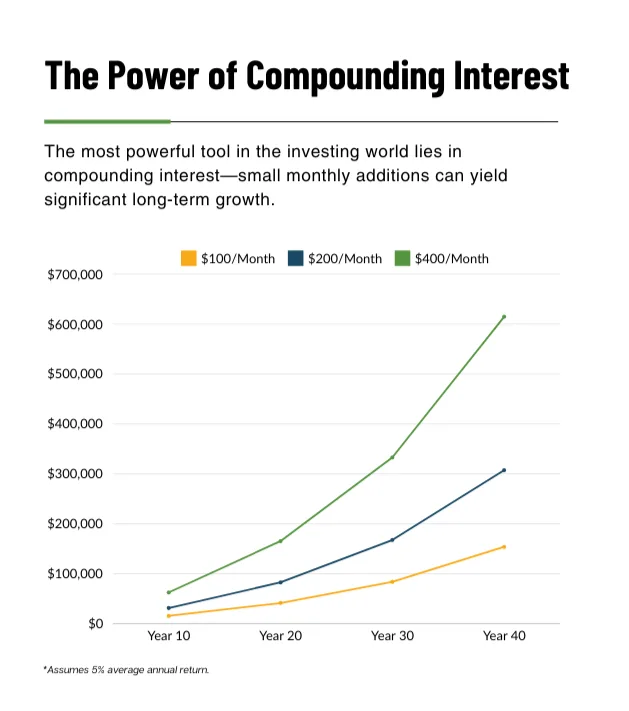
Along with this, and when possible, we recommend joining the Employer Group Savings Plan. Of course, within a Group RRSP, it’s optimal to do at least the minimum contribution to draw the full employer match available, but if that’s not financially possible, it’s beneficial to deposit even the smallest amounts, which will benefit from long-term compound interest. 

rrsp-tips compounding interest

If your younger employees are not eager to join the Group RRSP, it can be worthwhile to show them some of the key benefits such as the impact of long-term growth, and the tax advantages of a registered deposit. For most, a pre-tax payroll deduction is something that actually goes unnoticed!


Mid-career; it’s time to serious about planning, from a holistic perspective

For those who are more established in their careers and whose incomes (and families) may be growing, it’s time to really assess your short-, mid- and long-term goals in order to ensure you are on track.

Expenses are often very high at this point, and being strategic with tax planning, investing and insurance is paramount in order to set you up for retirement, even though it may be 2-3 decades away.

If it’s not something you’ve done already, this is the time to run projections in order to learn the specific steps and financial requirements needed to achieve your goals. Additionally, people in this stage of life often require greater amounts of insurance (life, critical illness and disability insurance, for example) to protect their families and assets.

Engaging with a qualified financial planner is the best way to ensure you are getting appropriate advice, but these days, there is also a plethora of information available online. Specifically, your benefits and group savings plan providers offer great education resource hubs.

When it comes to your group savings plan, if you’re not already doing so, this is the time to ensure you are maximizing the employer match. If you have taken the ‘set it and forget it’ approach with your investments, assessing not only your contribution amount in dollars but also your investment choice is essential.


Approaching retirement; review and refine

As you approach retirement, it’s important to have a clear sense of your financial position, as well as any insurance needs you may have. The emphasis during this phase is on finetuning.

Firstly, with regards to insurance, it’s important to be clear as to whether you will have health and dental coverage in retirement via your employer, or how you can obtain an individual plan, if there is no employer coverage after you are no longer actively at work. Additionally, insurance plays an important role in estate planning; speaking with a qualified advisor to assess your needs in this area is recommended.

When it comes to income in retirement, ideally, if you have taken proper steps to plan and save along the way, you will not find yourself playing catch up in the last years of your working life. In the last decade prior to retirement, it is time to really look in depth at the various sources of retirement income (CPP, OAS, RRSPs etc) and understand the numbers. What will you receive, and when? Do you need to make modifications to your goals or timelines? Do you have plans to change your residence, and how could a home sale factor into your planning?  At this point, there is still time to make the necessary tweaks or implement revised strategies. It goes without saying, if you’re not taking advantage of an employer RRSP in full, this should be a priority.  


Employers- what role can you play?

Remind your staff to pay attention to the amount they’re contributing, where the funds are allocated, and whether this aligns with their goals.

Many employees overlook naming a beneficiary for their registered accounts; this is important as the funds will transfer directly to this person in the event of the member’s passing.

Encourage staff to seek customized advice, that considers their unique situation and goals.  If it is intimidating to reach out to a person, please keep in mind that support is accessible in various ways. Depending on their comfort level and desire for interaction, individuals can choose to access support online, by phone, email or in-person.


Why should Employers offer a Group Savings Plan?

If you’re not already offering your team a Group Savings Plan, it’s time to get started! There are so many reasons for Employers to implement an employee RRSP or DPSP. We have written an entire article on this, but here ere are a few key advantages:

  • Tax-advantaged way to reward employees financially
  • Provide a means to save for retirement
  • Provide financial literacy support
  • Reduce employee stress related to finances
  • Retain qualified staff
  • Be a competitive employer in a difficult hiring environment

If you’d like to get started, please reach out to the experts at the Immix Group via email at info@immixgroup.ca or by phone at (604) 688-5559!

Key Takeaways

  • Start Early, Even Small Contributions Matter – Young employees should prioritize starting their savings journey, even with small amounts. Utilizing both a Tax-Free Savings Account (TFSA) for emergencies and a Group RRSP for long-term investments can establish good financial habits.
  • Maximize Employer Contributions – Employees should take full advantage of their employer’s Group RRSP matching contributions. Not doing so leaves money on the table.
  • Mid-Career Planning is Crucial – As employees advance in their careers and face growing financial responsibilities, they must strategically plan for short-, mid-, and long-term financial goals, optimize tax strategies, and review their insurance needs.
  • Pre-Retirement Adjustments are Key – Those nearing retirement should closely analyze their expected income sources (CPP, OAS, RRSPs etc) and expenses, ensuring they are financially prepared. Reviewing insurance coverage and estate planning is equally important.
  • Employers Play a Vital Role in Financial Wellness – Companies should encourage employees to actively manage their RRSPs, name beneficiaries, and seek professional advice. Offering a Group Savings Plan enhances financial literacy, reduces stress, and helps attract and retain talent.

Top 5 FAQs

Even small contributions benefit from long-term compound interest, significantly growing over time. Plus, RRSP contributions lower your taxable income, providing immediate financial benefits.

A Group RRSP often comes with employer matching contributions, which can significantly boost your retirement savings. Additionally, contributions are deducted pre-tax from payroll, making saving effortless.

Ideally, contribute enough to maximize your employer’s match. Beyond that, aim for a contribution that aligns with your long-term retirement goals, balancing it with other financial responsibilities.

Contributions reduce your taxable income, which can lower your tax bill or increase your tax refund. Additionally, investment growth inside an RRSP is tax-deferred until withdrawal, helping your money grow faster.

A Group RRSP helps employees save efficiently for retirement while reducing financial stress. Employers benefit by attracting and retaining top talent, offering financial wellness support, and gaining tax advantages.

Lindsay Byrka

Lindsay Byrka, CFP® BA, BEd

Vice President, Immix Group: An Employee Benefits Company
A Suite 450 – 888 Dunsmuir St. Vancouver V6C 3K4
O  604-688-5262 

E lindsay@immixgroup.ca
W www.immixgroup.ca

Latest Insights

Affordable and innovatively structured employee benefit programs